What Do Ferrari Model Numbers Mean?

For most Ferrari-buffs, the answer to this question is elementary knowledge. To others, it may not be, as it is not a simple answer. Much like the English language, there are no real rules when it comes to Ferrari Model numbers–the moment you see a pattern or rhythm, it changes on you, goes…

For most Ferrari-buffs, the answer to this question is elementary knowledge. To others, it may not be, as it is not as simple an answer as you might think. Much like the English language, there are no real rules when it comes to Ferrari Model numbers–the moment you see a pattern or rhythm, it changes on you, goes back to the old pattern, changes again, etc.

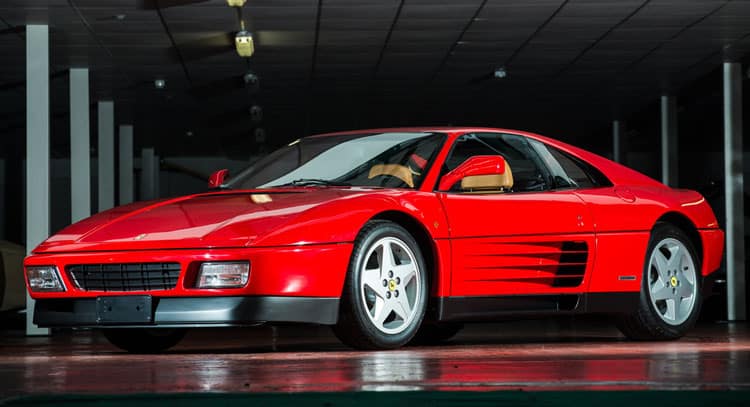
In general, for most models up until 1980, Ferrari used a 3-number naming system based on the car’s engine displacement. The V6 and V8 models used the displacement for the first two digits, then the number of engine cylinders as the third digit. So, for example, the 348 is named as such for its 3.4L V8 engine (3,4, and 8). The 206 and F355 follow this same pattern. The 360 Modena and the F430, however, refer solely to engine displacement, without the inclusion of engine cylinders. The 458 Italia, however, which succeeded the F430, goes back to the pattern followed originally, naming after the engine displacement followed by the number of cylinders. Other patterns were used also. The Flat 12 (boxer) models, for example, followed a naming pattern that used the engine displacement in litres for the first digit and the number of cylinders for the last two digits. Some models, such as the Mondial and Testarossa, did not follow the three-number system. This can prove to be very confusing, not just because of the changing in naming-system, but because some models share the same engine type, so most Ferraris were also given designations referring to their body style. In general, the following conventions were used:

M: Stands for “Modificata,” in Italian, (modified in English). Appearing at the end of the model’s number, a modified version of the model, not a new model entirely. 575 M Maranello, for example

GTB: Stands for, “Gran Turismo Berlinetta,” meaning coupe.

GTS: Stands for, “Gran Turismo Spyder,” meaning convertible. Convertible models are now spelled with an “I”, Spider.
*In more recent models, this is used for targa top models (i.e. F355 GTS), the 348 TS being the only exception, which is the only targa named differently.

GTO: Stands for, “Gran Turismo Omologata,” which, like M, appears at the end of a model’s number, denoting a modified version of its predecessor. The difference being that the model has been designed and improved for the racetrack, though it is still street-legal.
*Only three models bear those three letters; the 250 GTO (1962), the 288 GTO (1984), and the 599 GTO (2010).

F: Added to the beginning of all models in the mid-1990s, but was abandoned after the F355, then added again with the F430, but not with the following model, the 458 Italia.

The inconsistency of Ferrari’s naming system can be confusing, as it does not always follow the same pattern, but we can be sure of one thing: Each and every model is spectacular.  So, while there is not a distinct consistent throughout that applies to all models, you can be sure there is a reason behind each model’s specific name and number.

Ferraris from a Woman’s Point of View

Ferrari, 308, true six-speed, clutch life these words used to be non existent in my life. That is, until I married a Ferrari-osessed man with a passion for these European exotics. Suddenly, my world became flooded with a wide variety of terms I didnt understand. A few years into my marriage, I decided to…

Ferrari, 308, true six-speed, clutch life these words used to be non existent in my life. That is, until I married a Ferrari-osessed man with a passion for these European exotics. Suddenly, my world became flooded with a wide variety of terms I didn’t understand. A few years into my marriage, I decided to join my husband working with him at Merlin Auto Group, watching as he and his team sold everything from collectible Ferraris to the more common California. Never in a million years did I expect to not only understand the obsession, but actually come to appreciate the Ferrari on another level.

Observing the true Ferrari Fanatic was something that baffled me at first. I couldn’t comprehend the reaction people would have when a new Ferrari would hit our showroom for the first time. I would hear comments on everything from the color combination, to the rarity of the model in a particular year. The thing I found the funniest was that there are actually group of people who love a manual Ferrari and will choose it over an automatic every time. A stick shift….crazy, right? Lets just say I had a lot to learn about Ferraris, and boy did I.

One of the first things I learned is that Ferraris are not seen as just a car, it is so much more than that: They are a luxury item leaning heavily into the realm of collectibility. When I realized this, it was a concept I could finally wrap my head around, because I have experienced the same feelings before. It is like an amazing Louis Vuitton bag, a vintage Gucci piece, or the discontinued Chanel purse that has become collectible. The details and the stitching are precise and iconic. How about Hermes Birkin bag? This infamous purse starts at roughly $10,000 and can retail up to $150,000. Better yet, you cannot just go and buy one. You have to know someone or sometimes there can be waiting lists for years. Seems absurd to some, but I do love a great bag and can appreciate the process Hermes has set forth. Little did I know, Ferrari has a similar selection process with their cars. Not just anyone can go and buy a new Ferrari, Ferrari looks at a variety of criteria, such as the number of Ferraris you have owned, the length of time, etc. This really opened my eyes to take a second look at the world of Ferraris.

Looking at this 2003 Ferrari 360, it suddenly went from being just a used car, to a classic Ferrari 360 with a true six speed manual that was discontinued years ago, making it a rarity in the car world. The same way we see celebrities sporting their vintage Chanel dresses on the red carpet, you will find a true Ferrari enthusiast driving around in their 1987 Ferrari 328.

Oh, and color is a thing too. I once saw a customer refuse to buy a Ferrari in any color other than one in red because he wanted his first Ferrari to be Rossa Corsa, or Ferrari Red. Kind of rings a bell when it comes to closet staples, i.e. LBD, red-soled Christian Louboutins, certain things are a must.

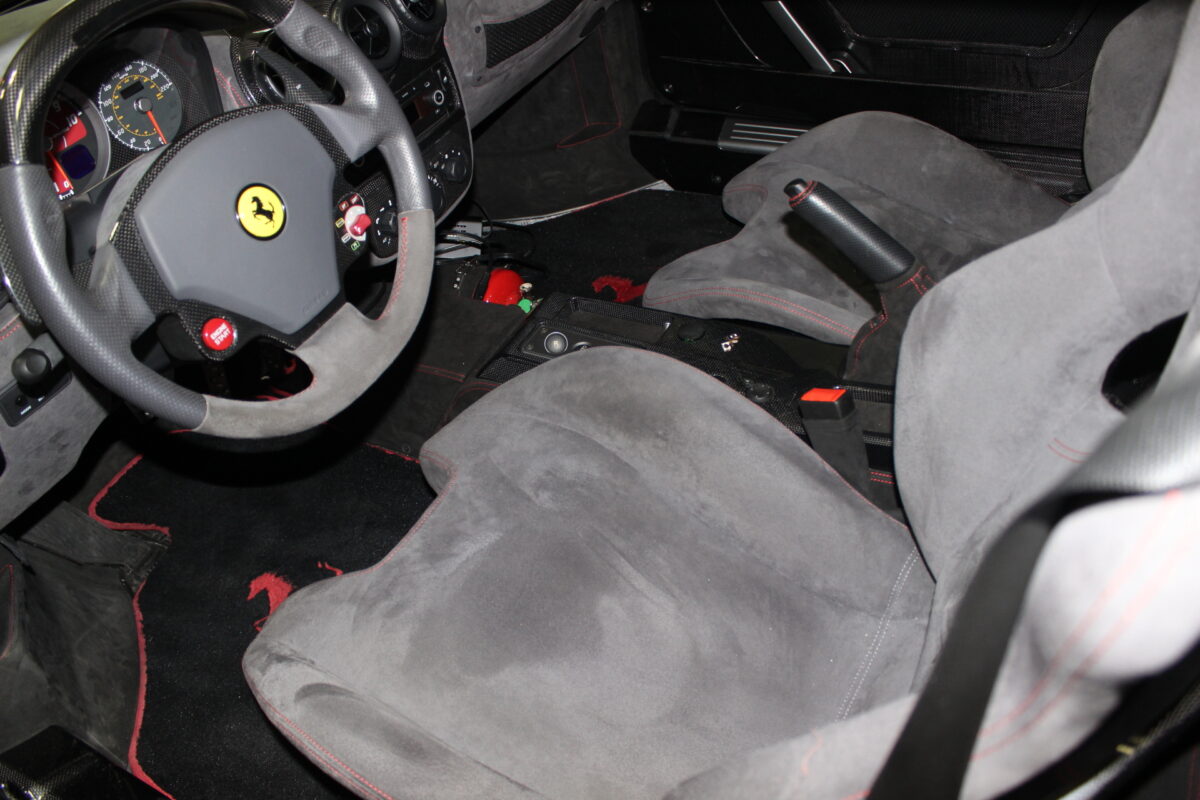
Clearly, I started to realize all the parallels between my interest in fashion and his in Ferraris, but at this point, I had yet to experience what it was like to drive a Ferrari. I think it is difficult to really comprehend what 0-60 mph in 3.0 seconds feels like until you actually are the one with your foot on the gas. Forget the speed aspect, because I am not even one who cares to drive that fast, but having the power and accurate handling when you are driving day to day is really quite nice to have. Some of these exotics have a fit in finish that is spectacular with everything being hand-made and with all the options. Others, while still having the hefty price tag, will come stripped of all the options; and I mean cloth seats, not leather. Absurd right? Not when it comes to Ferraris, which are race cars that evolved to street cars, some of which are still built purely for speed and performance. Take the Ferrari F430 Scuderia for example. This is a car stripped of its leather and replaced with a carbon fiber interior just so it can be 220 lbs lighter, and in the world of racing, lighter=faster. Once again, Ferrari is staying true to its roots and producing an unbelievable car. In the world of fashion, I think of some of the outfits top designers will parade down the runway. Many of the over-the-top outfits are probably worn once, if at all, the same way I bet not everyone who purchases a Ferrari 488 drives it to its top speed of 205 mph. It still is one of the best, most sought after cars out there.

Evidently, I prejudged my Ferrari-crazed husband. Today, I understand that when he stares at his beloved 308, he sees a work of art that will never be produced quite the same way again. And he’s right. Never did I expect to uncover these truths as I set out snickering at the enthusiast who could find such love in a prancing Italian horse.

The Ferrari F430 Scuderia

If you love the look of the Ferrari F430, but want to have something a little more special than everyone else, the F430 Scuderia is the car for you. Weighing a staggering 220 pounds less than a standard 430, this car is built for speed and performance. A bare-bones interior–no carpet, carbon fiber trim and alcantara seats instead…

Scuderia: (skudeˈria), noun. “Stable” in the Italian language. It has entered English usage mainly through professional auto racing, in which many Italian teams incorporate the term in their names.
If you love the look of the Ferrari F430, but want to have something a little more special than everyone else, the F430 Scuderia is the car for you.

The successor to the Challenge Stradale, the 430 Scuderia was introduced at the 2007 Frankfurt Auto Show by Michael Schumacher, and was created with the intention to compete with cars like the Porsche RS-models and the Lamborghini Gallardo Superleggera. Weighing a staggering 220 pounds less than a standard 430, this car is built for speed and performance. A bare-bones interior–no carpet, carbon fiber trim and alcantara seats instead of leather–allows for the decrease in weight. The Scuderia is not only lighter and quicker than its competitors, it’s exterior is even cooler: simpler and more like a race car. While it maintains the same coupe shape, the lower stance and sharper detailing of the Scuderia give it a more aerodynamic silhouette than the 430, without sacrificing its versatility as a car for every day use.

Simply put, the Ferrari Scuderia is the finest street-legal, exotic motor car on the market. With an upgraded, superfast F1 transmission, exhaust, and intake modifications from the factory, the F430 Scuderia accelerates from 0-60MPH in a mind blowing 3.6 seconds, and boasts a top speed reported at 198 MPH. View our 2008 Ferrari F430 Scuderia here.

Ferrari claims that the Scuderia matches both the Enzo and the F430 successor, the 458, around their test track in Italy. Ferrari is not the only carmaker to build street legal race cars.  Both Porsche and Lamborghini have models that compete with the Scuderia. You may be wondering which brand will make the best investment…well, that depends on who you ask…but take it from us, always bet on Ferrari.

Financing Your Dream Ferrari

When it comes to buying your dream Ferrari, what a lot of people don’t realize is that there are numerous ways to pay for the car. It is often assumed that you must have a net worth of seven or eight figures, prepared to wire transfer the full amount in cash in order to make your dream of owning a Ferrari a reality. Thankfully, this assumption is not true. In today’s world…

When it comes to buying your dream Ferrari, what a lot of people don’t realize is that there are numerous ways to pay for the car. It is often assumed that you must have a net worth of seven or eight figures, prepared to wire transfer the full amount in cash in order to make your dream of owning a Ferrari a reality. Thankfully, this assumption is not true. In today’s world, there are many terrific options to choose from when looking to finance a Ferrari or any other exotic vehicle for that matter.  With loan terms as long as 144 months and custom tailored leasing options, the reality of owning a Ferrari is a lot closer than many people think.

Another thing many people say is, if you cannot afford to finance a car on a shorter term agreement (meaning a 48 or 60 month loan), you should not buy it. While this is true for most cars, it is not necessarily true for all. When it comes to Ferraris consider this: Given that it is one of the most collectible car brands on the planet, even if you finance it for 12 years, it is likely that the car will be worth more at the end of the loan term than it was the day you bought it. Click here for more information on  how a Ferrari can appreciate  over time. We know this may defy all of the car advice you find on the internet and go against everything any expert has told you, but take it from us–explore the financing option that may make your Ferrari dream come true.

What Changed from the 360 to the F430?

The common misconception is that the F430 is pretty much the same as the 360 apart from a few styling changes, a slightly more powerful engine and an upgraded interior. While some of this may be true, it is important to look at each car as its own entity, celebrating their traits rather than attempting to prove one better than the other, as that is a matter of preference. Let’s start by looking at some of the similarities and differences between the…

The common misconception is that the Ferrari F430 is pretty much the same as the 360 apart from a few styling changes, a slightly more powerful engine and an upgraded interior. While some of this may be true, it is important to look at each car as its own entity, celebrating their traits rather than attempting to prove one better than the other, as that is a matter of preference. Let’s start by looking at some of the similarities and differences between the 360 and the F430.

STYLING: The Ferrari 360 Spider is a light-weight model that was produced from 1999-2005 with a new, all-aluminum space frame chassis and new Pininfarina body styling, boasting a curvier silhouette that deviates from the sharper angles of preceding models, such as the F355 and 348. The F430 then succeeded the 360 in 2005 and adjusted aesthetically to improve its aerodynamic efficiency. Though the 360 and F430 share the same basic chassis, doors, roof line, and glass, they, in fact, look quite different. But it’s not just their appearance that differs. As time goes on, and with each new model that debuts, the appeal of the 360 and 430 grows, evoking feelings of nostalgia and appreciation of the past.

INTERIOR: There seems to be more comfort and refinement in the F430, which is to be expected from a later model, as there are naturally going to be improvements. The dash looks a little different with the switches moving around a bit (i.e. the fuel cap and front boot are now able to be opened with the flick of a switch, now located on the dash). Have a look at this 2004 Ferrari 360 Spider  and this 2009 Ferari F430 Spider  to have a better look at the interior differences.

SUSPENSION: The active suspension from the 360 was carried over to the F430, with improvements being made in this area as well with the later model.

TRANSMISSION: Both the 360 and the F430 were offered with a choice of manual or semi-automatic (F1) transmission. Manual vs Automatic is always up to the driver and what they prefer. There does not seem to be an obvious difference between the manual 360 and the manual F430, however there is a definite improvement in the F1 F430 compared to the F1 360. The F1 F430 is much quicker to engage, making it feel almost like an automatic when pulling away from a standstill, and noticeably more braking force at the rear wheels.

ENGINE: One of two big differences between the models. The 360 engine (F131) was the last in the long line of engine evolution that lasted nearly 40 years whereas the F430 engine (F136) is brand new and the first in a line that has continued into the 458 and California.

As we found with manual vs. F1 transmissions, whether you like the 360 or the F430 more is all a matter of preference. Arguments can be made for both models and opinions can vary greatly. One common fact is this: every Ferrari-lover, no matter what your favorite model is, can agree that the beauty, power, and speed offered by this manufacturer is unparalleled.

Ferraris: Manual Transmission or the F1?

This topic seems to spark a heated debate about whether a manual transmission or an F1 is better. After hearing numerous opinions and arguments on the subject, we have determined that it is all a matter…

This topic seems to spark a heated debate about whether a manual transmission or an F1 is better. After hearing numerous opinions and arguments on the subject, we have determined that it is all a matter of preference. The whole point of the evolution of the F1 was to make it all-automated and increase the power of the car, to make it the quickest off the starting line, and to provide the quickest gear-shifting. While this has been great for some, a lot of people don’t necessarily care about the car being the fastest–they prefer the raw driving experience, and enjoy doing all of the work.

People who prefer manuals are often resistant to the F1 transmission because they feel it diminishes the purity of the car. If this were true, however, then why has the F1 become so popular? The answer to this question really depends on who you ask, but if you think about it–it makes sense. A lot of people who own businesses still like to keep their books by hand even though there are numerous computer and software programs to help them do things quicker and more accurately. Well this is precisely why Ferrari no longer makes true gated manual transmissions.


In today’s competitive market, it has become all about shift times, speed accuracy, and performance on the track–and let’s face it, computers can do things much faster than we can as humans. While most purists enjoy to feel the road and have to shift the gears on their own, people looking for quick track times, good 0 to 60 numbers and performance statistics, the F1 transmission is a better solution.

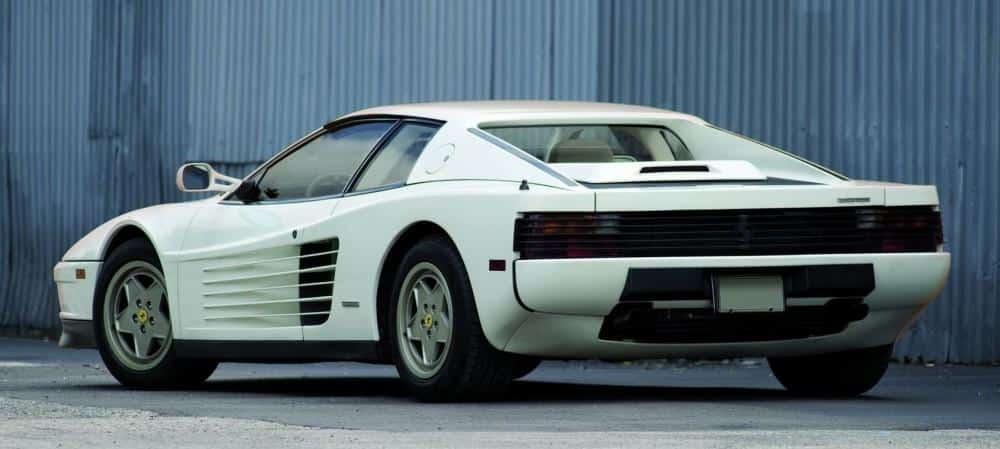
If you have ever watched a Formula One race you see that these people are shifting gears faster than the blink of an eye. This is what has inspired all of this new technology so that we too can be like racecar drivers. So, if you want to make sure you beat your neighbor to the grocery store, pick up an F1 automated manual transmission Ferrari. If, however, it’s more important to you to have the rarest car in the parking lot, like this manual 1987 Ferrari Testarossa, a true gated manual transmission is a much better choice.

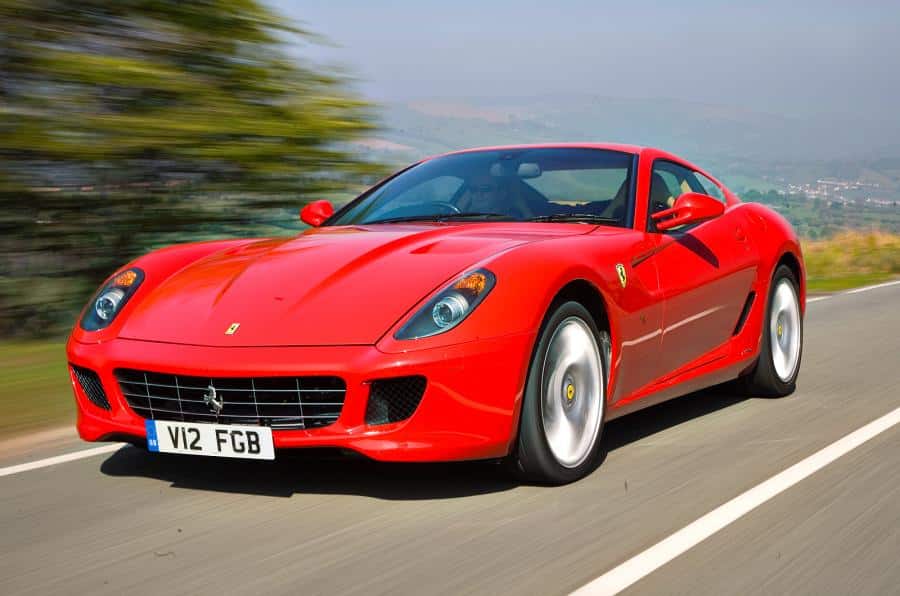
What’s So Special about the Ferrari 599?

The Ferrari 599 GTB Fiorano is an Italian sports car produced by Ferrari from 2006-2013, replacing the 575M Maranello in 2006 as a 2007 model, then was replaced by the F12 Berlinetta in 2013. The car takes its name from the…

The Ferrari 599 GTB Fiorano is an Italian sports car produced by Ferrari from 2006-2013, replacing the 575M Maranello in 2006 as a 2007 model, then was replaced by the F12 Berlinetta in 2013. The car takes its name from the Fiorano circuit Ferrari uses to perfect the performance of its race cars and road cars. GTB stands for Gran Turismo Berlinetta, after the most famous Ferrari berlinettas ever built, and 599′ is the displacement of the V12 engine divided by 10.

So what’s so special about the 599? It’s a Ferrari, so, of course, that instantly makes it exclusive, unique, desirable, etc. Oh, and fast. Very, very fast. But what about this model in particular makes it one of the most sought-after exotic vehicles on the market? We attribute this model’s appeal to its near-perfect blend of opulence and performance. When people think of Ferrari, rarely are they thinking about luxury, comfortability, or functionality as an every day driver. More often than not, Ferraris are considered for their speed, their collectability, their pedigree. The Ferrari 599 is one of the first models to embody all of these attributes. This is a fast car. So fast in fact, its engine production made it the most powerful series production road car of its time.

“How fast” you ask? 0-100 mph in 7.4 seconds, and 0-60 mph in just 3.7 seconds. Those are impressive numbers, but it’s not just its speed that’s impressive. What is perhaps most impressive about the 599 is its statistics, considering its usability and everyday drivability. When creating the 599, the main focuses were to increase driving pleasure, to guarantee performance and to ensure comfort, ergonomics and safety. For a brand that’s known for its race-car-like ride, “driving pleasure” is of course a relative term, but one we found to be much more broad and relatable when it comes to this model. In other words, Ferrari-fanatics and race car drivers are not the only ones who will enjoy driving (and riding in) the 599 GTB Fiorano. This model can be driven safely and comfortably all day, every day.

Comfortability, practicality, speed and safety are all what characterize the 599, but what interests us further about these vehicles is their rarity. The vast majority of the Ferrari 599 GTB’s have been equipped with the semi-automatic gearbox as apposed to the manual 6-speed gearbox. Only 30 examples have been produced with a manual gearbox of which 20 were destined to the United States while 10 remained in Europe. Given the exclusivity of a manual version of this model, the 599 is actually what started the craze of the manual 6-speed, as it was the first time people spent a lot of money on a Ferrari of this type. At the RM Sotheby’s Amelia Island 2015 auction, for example, a pre-owned Ferrari 599 GTB with a six-speed manual transmission went for a record $682,000 (for comparision, an automatic Ferrari 599 can be acquired at a fraction for $165,000), demonstrating the craze for true manual transmissions. Not only that, it was one of the first engines that produced that kind of power without turbocharging–in other words, the 599 has a naturally aspirated engine.*
The 599 presents a model of sophistication and athleticism that is pleasing to the eye without compromising its capabilities on the race track. The 599’s touring comfort in conjunction with its epic performance and rarity secures its place in history as one of the greatest Ferrari road cars ever.

*A naturally aspirated engine is an internal combustion engine in which air intake depends solely on atmospheric pressure and which does not rely on forced induction through a turbocharger or a supercharger.

What to Consider When Buying an Older Ferrari

There are many things to consider when purchasing an exotic car, especially when purchasing a Ferrari…especially when purchasing an older, used Ferrari. There is the obvious to consider, of course, which is year and model–obvious, but important. Next you might consider something like, is…

There are many things to consider when purchasing an exotic car, especially when purchasing a Ferrari…especially when purchasing an older, used Ferrari. There is the obvious to consider, of course, which is year and model–obvious, but important. Next you might consider something like, is this car a convertible (often called a “Spider”), a Targa roof (often called a “GTS,” or, “TS”), or is it a coupe (often called a “Berlinetta”). Most people would make the choice of the above based on their desire, but when buying a pre-owned Ferrari, you should also consider collectability. For some models, Targas and Coupes are much more valuable than convertibles–this is all based on production numbers back when the cars were being built. For example, the Ferrari F355 models, in production from 1994-1999, are far more valuable as coupes, as there were fewer produced. This theory does not apply for later model Ferraris.

You should also consider what is referred to as the Vehicle’s Pedigree. This is the number of previous owners, the area of the world that the car spent most of its life, the amount of service history that is included with the car, and the level of services that have been performed. Obviously, you want a car with a clear and rich service history, as much documentation as possible, so you know where the car has been and how it has been cared for. Every Ferrari has a story, and it is important to find out as much as you can about its history, for that creates the long-term value of the car. From this, you should be able to learn about previous accident history, and if the car has any deferred maintenance expense that you may have to consider doing post-purchase.

Another thing to look for when buying a used Ferrari is the car’s originality. What do I mean by this? Ask the question: does this car have a lot of aftermarket modifications, or is the car true to its original build configuration? The car’s originality is vital to its collectability. It’s said that cars are commodities, but Ferraris are not. Ferraris are also not just cars, they are dreams, they are stories. Each Ferrari is special and unique, and the more you know about it and can differentiate it, the more collectible it is. Based on the findings of all of the information above, and with the help of Ferrari experts, you can make an educated decision of fair market value, and ensure you are investing in the right Ferrari for yourself.

Ferrari Timing Belts: Servicing Your Exotic

Caring for an exotic vehicle is often a time-consuming and meticulous process. Especially for new collectors or luxury car owners, it’s also a process that typically needs guidance and understanding, as they are not your typical cars; they are powerful, intricate machines that need…

Caring for an exotic vehicle is often a time-consuming and meticulous process. Especially for new collectors or luxury car owners, it’s also a process that typically needs guidance and understanding, as they are not your typical cars; they are powerful, intricate machines that need specific care and attention. One of the most important services performed on vehicles of this caliber is a timing belt service. Below are answers to some of the most common questions when it comes to servicing the timing system.

What is a timing belt?

A timing belt, timing chain, or cam belt is a part of an internal combustion engine that synchronizes the rotation of the crankshaft and the camshaft(s) so that the engine’s valves open and close at the proper times during each cylinder’s intake and exhaust strokes. In other words, a timing belt is a critical component of an engine and controls the timing of the engine’s valves, that if failure occurs, could cause catastrophic damage to the entire engine. The potential for disaster can easily be avoided by replacing the timing belt within the manufacturers recommended time and/or distance replacement interval.

Why are they important?

Timing belts control when valves open and close. If they stretch too much or break, valves open when piston comes up, bending the valves–leading to catastrophic engine failure and the need for a complete rebuild of the engine. When replacing timing belts, care must be taken to ensure that the valve and piston movements are correctly synchronized. Failure to synchronize these movements can lead to problems with valve timing, and in extreme circumstances can cause collision between the valves and pistons. Correct belt tension is also critical. If the belt tension is too loose, it will whip and if the tension is too tight, it will whine and put excessive strain on the bearings of the cog. In either case belt life will be dramatically shortened. The timing belt replacement interval coincides with, and is usually part of, a scheduled maintenance. These maintenance services typically occur every 60 months (this can vary somewhat for each individual car depending upon your cars specific maintenance schedule).

Why do timing belts need to be monitored and changed frequently?

Preventative maintenance. Timing belts are made of rubber, which break down over time due to heat, mainly. Given the amount of heat associated with the front of a car engine, these rubber belts will experience wear and tear. Because the timing system is crucial to an engine’s functionality, you can never be too cautious when it comes to maintaining its inner-workings. With proper maintenance, it is unlikely that you will experience problems with your timing belts or timing chains.

How often should a Ferrari have a timing belt service done?

For whatever reason, when it comes to Ferrari, there is a lot of debate around when the timing belts should be serviced, how frequent, etc. Despite the recommendation coming directly from the manufacturer, people seem to doubt its credibility. The most common argument being that timing systems on “normal” cars (your everyday drivers) can last up to 10 years, so a Ferrari shouldn’t be any different, Ferrari is trying to steal your money, etc. We’ve got news for those people: Ferraris are not “normal” cars, they are complex machines, so they should be maintained as such. Preventative maintenance is crucial in order to avoid a $20,000-$30,000 engine replacement or rebuild.

Suggested maintenance intervals:

These intervals vary, as every model is different, so it is always best to review the owner’s manual, as that is the suggestion directly from the manufacturer.

Generally, every 60 months for the following models: Ferrari F348, Ferrari F355 Berlinetta and F355 Spider, Ferrari 360 Berlinetta and 360 Spider, Ferrari 456, Ferrari 550 Maranello, and Ferrari 575 Maranello.

Every 60 months for Ferrari 612 and Ferrari 575 Maranello