Enzo Ferrari: The Man Behind the World’s Most Exotic Car Brand

If you can dream it, you can do it’s Enzo Ferrari.

Whenever many think of the name Ferrari, chances are they associate its founder with a level of wealth and prestige.

They may not think of a man who had all odds against him, one who had a tragic family life and the disapproval of those who he regarded in high standards.

This was a man who was constructed of nothing but passion, obsession, and raw drive. We are talking, of course, about Enzo Ferrari.

The Beginning

Alfredo and Aldegisa Ferrari would welcome Enzo Ferrari into this world in Modena, Italy, on February 18, 1898. Despite the legacy that would ensue, his parents predetermined that Enzo and his brother Dino would work within the family business. Alfredo was a structural steel contractor and would strive for his sons to join him.

As a boy, Enzo already knew work in his father’s shop was not the life he wanted. Despite what his romanticized imagination may have dreamt up for other career choices, Enzo still respected and loved his father. Perhaps Alfredo’s biggest blunder in raising his boys to follow in his footsteps? Taking both Dino and Enzo to their first automobile race in 1908.

Enzo initially had intents and dreams of living life as a journalist or an opera singer. He already knew that he wanted to be front and center in the limelight. Once he was exposed to the world of automobile racing, he had found his true calling.

During his very first visit to the track, Enzo would encounter the same addictive elements that many auto enthusiasts had experienced the speed, sounds, and smells of the racetrack. He quickly became addicted, nearly obsessed. The only antidote for this sickness could only be found in a troubling but triumphant future of the young Enzo Ferrari.

The World Wars

Before Enzo could follow or find his path, he and his brother would be exposed to the world wars that had stricken Europe. Before this, both Ferrari sons were being tailored for the family business. While Dino would follow his father’s dream, Enzo was resilient and would flunk out of school.

By 1915, Dino had enlisted in the Italian Army and served as an ambulance driver. In 1916, as the war waged on, Alfredo would pass away to pneumonia, and his brother would soon fall to typhoid fever.

Without Alfredo, the family business would fall, and Enzo was naturally sent into a whirlwind with the sudden losses of both his father and his brother. In 1917, Enzo was drafted into the Italian Army, and despite his claim of being a skilled auto mechanic, without any formal education or boastful background, Enzo was given the task of shoeing the mules.

The Ferrari Emblem

Despite a somewhat discouraging experience during World War I, Enzo would not walk away empty-handed. It was here he would be inspired by fighter ace Count Francesco Baracca, a man credited for 34 aerial victories. The black stallion painted on the side of Baracca’s fighter plane would result in the Ferrari emblem we know and love today.

Ironically, when Enzo had no choice, and the Fascist War Machine of WWII came to fruition, Enzo would serve again. Many historians are not sure exactly what the army initially wanted from Enzo, but they soon used him for his superb capabilities to manufacture and develop equipment.

Racing Career

After the war, Enzo had nothing left but to forge his way in the world. With a letter of recommendation from the colonel of his regiment and a dream in his heart, Enzo headed for Turin, Italy, to seek employment.

As a child, the Fiats on the racetrack had captured his soul, and he would look to the Agnelli Family for employment in the Fiat plant. However, much like those who turned him down in the war, they too would be unimpressed and turn Enzo away. It was then that Enzo would swear vengeance, and as a gentleman, he would settle this vendetta on the racetrack.

While living in Turin, Ferrari met a test driver who would get him a job with one of the small automakers in Milan. From the point of no employment and defeat, this was Enzo's first big break that gave the youngster the funds to purchase and race a used car. Ultimately, this car and Enzo's time on the track would land him the chance to race for Alfa Romeo.

The Birth of the P2

After several years of running with Alfa Romeo's racing team, Enzo and his fellow driver, the very one who landed him the job in Milan, would arrive at the European Grand Prix in Monza. Here, the Alfa Romeo P1 was planned to debut, however, with Enzo's dear friend Ugo Sivocci behind the wheel, the car had spun out, killing the driver.

Enzo felt the P1 was to blame for his friend’s death. This drove him to team up with engineers in the field to reimagine the car and develop what they had dubbed the P2, which would hit a top speed of 121 mph – an amazing feat for the 1920s.

With the P2, Ferrari and companions would reign victorious on the track, pushing the Agnelli Family off the track. From here Ferrari was backed by wealthy investors to develop racing cars for Alfa Romeo. For a man who was pushed to the proverbial gates of hell and back, this was the real birth of Ferrari as we know it today.

Ferrari

Not long after his steps to develop racing cars under his new business Scuderia Ferrari, WWII would postpone any further development into automobiles. Though, almost as soon as the war had ended, Enzo would develop the Tipo 125. This was a car with a massive V12 engine and was the first Ferrari car. Though in its very first race the fuel pump had broke, the Tipo 125 had held the lead with just three laps to go. Enzo took this as a promising failure.

With momentum under his belt and the attention of the world, Enzo was ready to grow from local hero to legend, but he needed more capital. It was an opportune time for Luigi Chinetti to approach Enzo for the exclusive rights to begin selling road cars under the Ferrari name in America. Enzo, a man obsessed with auto racing, had little interest in these vehicles, but it would provide the foundation necessary for him to continue to pursue his passion.

Life After Death

Enzo Ferrari never stopped pushing to develop the greatest racing cars of all time and always channeled his struggles, hurdles, and emotions into the desire to achieve excellence. Year after year, he would turn out more and more fantastic race cars that redefined what would be considered the standard of a racing automobile until his death on August 14, 1988.

In 2002, Ferrari would develop the Enzo Ferrari, also known unofficially as the Ferrari Enzo or F60.  Only 400 were produced between 2002-2004, and the F1-inspired, 651-horsepower Enzo Ferrari would become the pinnacle of Ferrari design.

At Merlin Auto Group we live and breathe Ferrari’s, and we owe it all to Enzo. Check out our latest selection of pre-owned Ferrari’s, as well as our expert-operated service center.
Ferrari 355 Buyer’s Guide To Avoid Costly Ferrari Services

Buying a Ferrari can be an intimidating process, especially if you are looking at an older, pre-owned one. Adam Merlin outlines the five main things to look for.

After so many years of buying used Ferraris, one of the most common questions I get asked is if I have a buyer’s guide for every specific model. The answer to this question is no, but what I think may be helpful is to outline the top most important things to look for in specific Ferrari models.

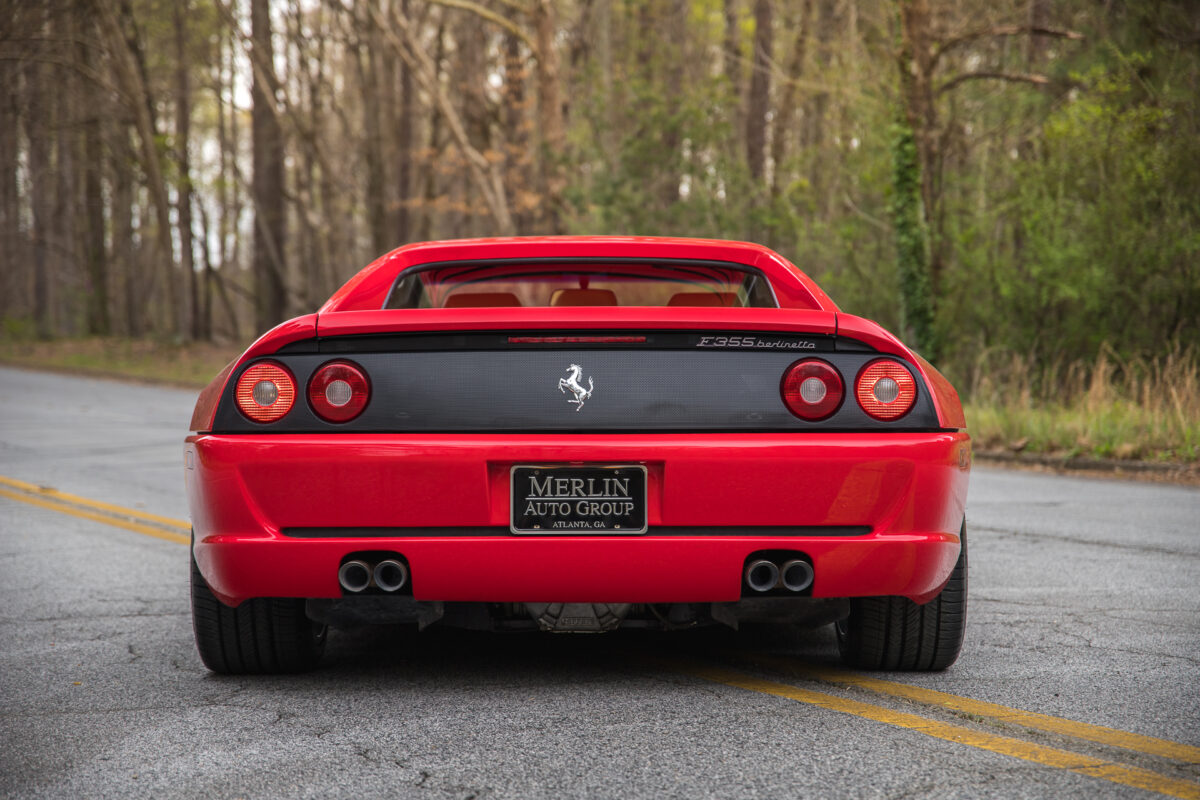
First, I am going to discuss the Ferrari 355. This car was produced from 1995 to 1999 and came as a gated six-speed as well as an F1 transmission. This Ferrari had three roof options:  a GTB hardtop coupe, a GTS Targa (removable roof) and a spider canvas, retractable, convertible top.  Now, let’s look at the top five things I recommend you go over when you are purchasing a Ferrari 355.

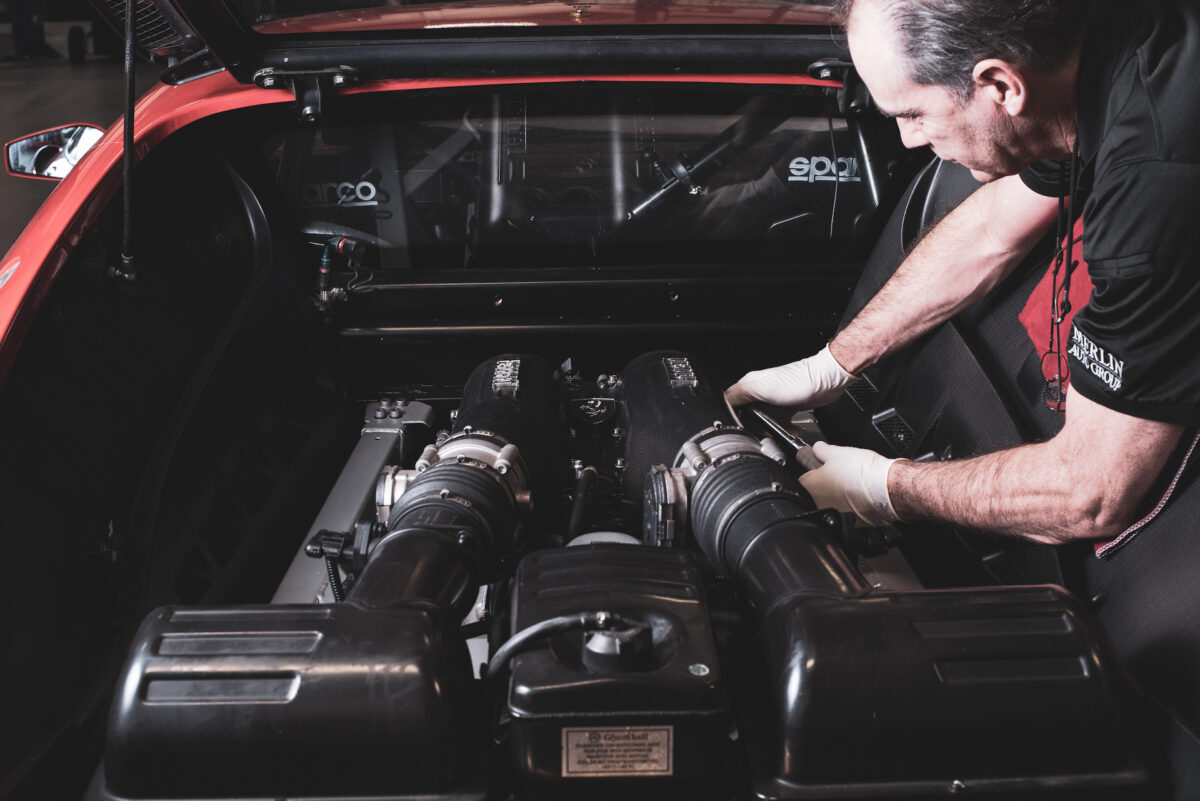
  • First, the most important thing to examine is the engine compression. It is imperative that you have a compression test done by a Ferrari technician who is familiar with this specific model to make sure that the car does not have engine compression issues. One of the scariest Ferrari service concerns with a 355 is valve guide issues with the motor because this can cause low compression in multiple cylinders.  An issue like this may lead to a motor rebuild, which could cost $30k, $40k, or possibly more.
  • Second, be sure to assess the clutch. If the 355 is an F1 car, you need to scan the clutch to try to determine the clutch life that is left.  If the Ferrari is a gated shifter, start the car and make sure that it shifts to every gear to ensure there are no transmission issues.
  • The next item you need to look at is the physical condition of the interior.  Ferraris, in particular, are known for their leather issues.  Leather shrinkage is a real concern and it can occur sometimes around the airbag covers, as well as on the seats.  Leather in these cars can also become very hard and crack at times, so be sure to examine the leather thoroughly.  Another interior problem is the notorious sticky button issue, which Ferraris are also known for.  Sticky buttons can be an incredibly expensive Ferrari service cost, so it is very important to know upfront what you are dealing with.  Lastly, the interior of the Ferrari will also tell you just how well the car was cared for.
  • Next, look underneath the car to see if there are any obvious damage or oil leaks. Signs of a fluid leak could lead to a pricey repair so be sure to have a thorough look.
  • The final thing you need to do is review the service records and all documentation to determine how well the Ferrari has been cared for. Look at how often the car has been serviced, what service issues the car has had, and any other Ferrari services that may stand out to you.  If you do not have any records for the car, you can sometimes find information online.

Now, this is certainly not a complete buyer’s guide to buying a Ferrari 355, but as a private individual who is not a professional at buying cars, this is a terrific start.  This will help you weed out many examples before you waste a lot of time on a 355 that is not a great investment.  Therefore, if you find a Ferrari and it passes your test in these five areas, then I would then say it's worth investing the money in a pre-purchase inspection with a Ferrari technician that can look over the car and assess its current condition.

Used Ferrari Buyer’s Guide: What You Need to Know

Learn about buying a new or used Ferrari, from finding a fair deal to the brand’s typical value appreciation. “In the quest for your Ferrari, you will have many factors to calculate into your decision-making process. A big one to keep in mind is how true to form the vehicle is and how that fits into your reason to own a Ferrari. A completely original model will have a major impact on the vehicle’s current value along with the resale value.”

Purchasing a Ferrari is a dream come true. However, that dream can quickly become cluttered with what feels like homework and formal assignments if you are in the business of buying a used Ferrari.

Buying brand new appears like the only way of owning one of these exotic cars. But when it comes to a name like Ferrari, there are decades of highly desirable models that, even by today’s standards, are performance icons. With that in mind, the cost isn’t the only thing to drive one to look for used models.

The problem is that these cars demand tons of attention and not just from other motorists and pedestrians. They are high maintenance and delicate works of art that can become a risky investment – especially if previous owners did not keep up on maintenance. Because of this, we are going to take a look at some of the top things you should keep an eye out for when purchasing a used Ferrari.

Read on below, and click on this image to see the Used Ferrari models currently available at Merlin Auto Group.

Finding a Fair Deal

Purchasing a Ferrari is no minor expense, and with any considerable sum of capital on the line, one will want to know that they are getting their money worth. Unless you are purchasing a newer model such as a Ferrari 488 Pista Spider or Portifinio, knowing an appropriate price is going to take some preliminary knowledge.

Each and every Ferrari model is a work of art, and like art, their value is subjected to the intricacies, condition, and history of the particular model at hand.

Though Ferrari is a lead producer of exotic cars and has been developing some of the most beautiful exotics for the greater portion of a century, performance is not the only contributor to value. Fine details go beyond the moving parts and are found in every last inch of the vehicle. 

Cost of Ownership

The cost of ownership is something that goes well beyond the initial investment. Proper maintenance, servicing, preservation, and proper storage should all be considered when purchasing a vehicle of this caliber. This is something you will need to be prepared to commit to as an owner to preserve the value of the vehicle.

Ferrari Service

Properly servicing of Ferraris isn't something to take lightly. These are far from the run of the mill automobile found on the roadways of today – as is the case with any exotic car. If this is your first time owning a Ferrari, be sure to do the legwork to find where you can have the vehicle serviced reliably.

This isn’t something you will want to approach as merely finding a technician who can service Ferraris in general either. Take the time to make sure that the technician is experienced with the model that you intend to own.

Vintage and Classics

Another aspect to keep in mind in terms of servicing is whether or not the parts needed are available to you. Many older models have components that are no longer available because the parts have been discontinued. This does not mean that they are no longer in existence; but they are much harder to track down. This again emphasizes the importance of acquainting yourself with an experienced technician.

Exposure to these situations over many years will have given the technician the necessary information needed to track down these parts. The owner can also contribute to the hunt by networking through car clubs and online forums.

Assessing Condition

Service and maintenance costs may be something one will need to associate themselves with immediately depending on the condition of the car. Small scuffs, faded paint, and worn leather seats are all going to reflect on the value of the car, and though you may be excited to finally get your hands on that 360 Spider, you will not want to overlook these details in the slightest degree. Being as scrutinous as possible may seem rude or even confrontational, but by at least identifying any existing issues upfront, you can be saving yourself from any unexpected expenses shortly after your purchase.

Pre-Purchase Inspection

Many issues can be easy to miss with a brief overlook. It’s best to have someone with the proper experience and equipment give the Ferrari a pre-purchase inspection (PPI) before making your purchase. Finding a qualified shop to send someone to provide the car of interest a proper look over can take some leg work, but by setting yourself up on regional forums, you can quickly get yourself headed in the right direction. The Ferrari community is beneficial with this, and PPIs are far from uncommon. Any reputable establishment will have the means and hospitality to make sure you receive adequate assistance. 

Has the Vehicle Been Serviced Regularly?

As you approach closure of the deal, you’ll want to make sure every last detail is in check.  This means going further than getting a thorough understanding of the vehicle’s current condition. Make sure to give a good look over the vehicle’s service records. This will not only help you understand the true condition of the exotic as it sits, but will help you further understand the vehicle’s history. 

Quality Servicing

As you look over the vehicle’s service records, you’ll want to be sure that a qualified technician also performed the work. Pennies pinched by opting for a low-cost service can have tipped the first domino leading to eminent expenses in costly repairs. This is certainly not something you will want to go through shortly after the Ferrari exchanges hands.

Is it Original?

In the quest for your Ferrari, you will have many factors to calculate into your decision-making process. A big one to keep in mind is how true to form the vehicle is and how that fits into your reason to own a Ferrari. A completely original model will have a major impact on the vehicle’s current value along with the resale value.

No Ferrari owner wants to think of reselling the car during the initial purchase. But to protect yourself  if that day arrives, the vehicle should remain as close to factory spec as possible for top resale value. Serious collectors like to get as close to full factory spec as possible.

Appreciation

Owning a Ferrari arrives with a significant perk – they garner value overtime. It’s rare in this industry to find cars that have values that will climb over the years. Ferraris are one of the few exceptions out there. With that said, purchasing a Ferrari is often treated as an investment opportunity.

With regular upkeep of even a used model in fair to excellent condition, one can almost guarantee that over time they will be able to turn around and sell their Ferrari, walking away with more than they put into it.

Merlin Auto Group consistently carries a large selection of used Ferraris ranging from older models to the 2010’s.

Why Ferrari & Maserati Service is Crucial for Longevity

Learn about types of Italian luxury car servicing and expected cost of maintenance. “Even down to the simplest jobs like replacing worn brake pads, the processes are subjected to nuances such as sequential tightening of hardware. If things like this are overlooked or forgotten, you are not only at risk of parts wearing down prematurely but can often result in catastrophic results and even considerably higher Ferrari repair fees.”

High maintenance. This is likely one of the first things you were warned about when you decided to own an exotic car.

There's no doubting that the cost of servicing a Maserati, Ferrari, and other luxury or exotic vehicles are often associated with high prices.

Many understand that prestigious vehicles go hand-in-hand with top-notch labor, but we can’t help but ask, “why?” All engine powered vehicles on the road today share much of the same characteristics, and most any can be taken to the average shop for repairs and routine maintenance.

But not a Ferrari or Maserati.

Vehicles of this class may have some similar characteristics to others, but are separated by craftsmanship and principal that make these more than just a car.

Click On This Image To Reach Our Service Center Page

Image of Red & Black Ferrari 355 engine on a stand while being serviced after being removed from the vehicle.

Annual Service

The engine, transmission, brakes, and just about every other component squeezed into your Ferrari or Maserati are not the same as what you will find under the hood of most cars.

Routine maintenance of Ferraris can rack up quite the bill. Though it may seem that the costs are only extraordinarily high because they are associated with the Ferrari or Maserati name, this is far from the truth.

Every last model produced by these brands is subjected to its own unique quirks and intricacies that make maintenance more of an art than conventional practice.

This means that the technician working on the vehicle will need to have the proper experience and training necessary to service the year and model of your vehicle properly.

How Does this Impact Longevity?

Even down to the simplest jobs like replacing worn brake pads, the processes are subjected to nuances such as sequential tightening of hardware. If things like this are overlooked or forgotten, you are not only at risk of parts wearing down prematurely but can often result in catastrophic results and even considerably higher Ferrari repair fees.

Specialty Tools

Beyond knowing the way the car is built and functions, specialty tools and equipment will be required to work on these vehicles. Often times assemblies and mechanical components are secured to the car in a fashion that is completely unique to these vehicles. Because of that, they will require equipment unique to these jobs. This only further emphasizes the need to find a technician who is trained and experienced with your make and model as they will likely have these tools on hand to effectively perform the job at hand.

Finding Your Serviceman

Ferrari servicing, along with servicing other exotic vehicles, will require you to find the optimal technician. If you are new to the community or have acquired a Ferrari from a different region, locating these services can be a bit of a challenge. But, by setting yourself up on regional forums like Ferrari Chat and joining car clubs, veterans and fellow Ferrari owners will be sure to point you in the right direction to not only find a trained hand, but one that knows every curve and line of your particular model.

Beyond Service Centers

When on the hunt for the right technician for your particular car, limiting yourself only to service centers can do more harm than good. While licensed and reputable centers will draw you in, they are not the only place where a skilled hand may lie. A technician can have received the proper training and equipment to service these vehicles, but work in their own, separate business.

If this is where you will find the best service available to your particular car, you should not deny yourself that quality of service based on name association alone.

Ferrari Services Reduced Over The Years As Models Evolve

Over the years, small and big changes in manufacturing Ferraris have led to easier servicing of these cars. Read more to learn some of the specific changes that have helped reduce the cost of ownership.

One of my favorite topics to talk about, when it comes to Ferrari service, is how much has changed over the years, really the last few decades, that has made servicing these cars so much easier. Many things are very different in today's Ferraris over the previous generation models and I want to mention some of the biggest differences that have made Ferrari maintenance a whole new ball game.

First, let’s identify the timing belt and how later model configurations, along with the introduction of the timing chain, drastically changed Ferrari service.  In the early Ferraris, as we all know, the need for a timing belt replacement often required the engine to have to come completely out of the car.  This, as you can image, resulted in a much higher service bill.  When Ferrari changed to the 360 model, they configured the car so that there is an access panel behind the seats allowing entry to the timing belts; I don’t even have to comment on what this did to ownership costs.  Besides, the cost of services was reduced even more when Ferrari went away from the timing belt and started with timing chains.  Why?  The chains rarely need to be changed because the metal doesn’t wear out as easily as the rubber does.

Saving money and Ferraris are two words not often associated with one another, but this is the case with transmission changes over the years.  Ferrari made a change in later model Ferraris moving from an F1 transmission to a dual-clutch F1 transmission.  A dual-clutch transmission in the later Ferraris is much smoother and easier when shifting which means that the clutch will not wear out nearly as much.  Previous generations, such as the 355 or 308, have a clutch that is much more cumbersome and wears much faster; and any Ferrari owner knows, the clutch is not the cheapest item to replace.

One other area that has changed over the years is the interior functions and switches.  As with anything, as technology has improved, so too has Ferrari functionality.  In years past, some of these switches have been completely unreliable and very expensive to fix and we are starting to see that change.

Unfortunately, there is still one service area that remains to be a thorn in my side and that is the notorious Ferrari leather and sticky button issue on the interiors. A brand new Ferrari today that is exposed to excessive sunlight will have leather shrinkage on the dash just like Ferraris of old. In fact, there is so much more leather in these newer models that it is a much greater concern.  The one positive with the sticky buttons is that, over the years, cleaning product has evolved and there is finally soap that will handle the stickiness without damaging the interiors.

In my opinion, owning a Ferrari is much more doable today than it has ever been because of some of the technology and changes Ferrari has made to their cars.

Investing in Used Ferraris Vs. Traditional Portfolios

Investing in Ferraris may sound absurd, but when you look at the actual data and returns, and compare it to more traditional investments, you may start seeing things differently. Learn more about actual ROI’s some Ferraris have been generating in the last few years and what opportunities are out there.

What is the cost of owning a Ferrari is one of the most common discussions I have.  I have written about Ferrari costs in the past because it is such a relevant and common topic, especially with exotics.  However, over the last few years, I have shifted the focus when this discussion arises because the world of Ferrari and investing is much different today than it was a few, or even 10, years ago.

People used to look at me like I was crazy when I suggested investing in Ferraris vs. traditional investments, but now that is not always the case, and it is definitely not the case when I discuss this with my collector clientele.  Recently, I had a conversation with one of my clients who has been investing in both real estate and Ferraris for decades and the facts could not lend more credibility to the collectibility of used Ferraris.  According to this particular client, over the last ten years, his residential real estate in New York only increased by about 72%, still not recovering to pre-2009 figures.  At the global level, his Hong Kong properties appreciated 220%, while high-end Europe is still recessing, with some portfolios losing half their value within a few months.

So what happened in the Ferrari portfolio?  Entry-level Ferraris increased 143%, high-end Ferraris moved up 395%, and ultra high-end Ferraris (59 Ferrari Testarossa, 250 Ferrari GT Berlinetta, 275 Ferrari GTB) did a staggering 300-500% increase.  Besides, many people believe the Ferrari Dino is likely to cross one million dollars in two to three years, and the Ferrari F40 will likely cross two million dollars.  And if you have the stomach for it, the Ferrari F50, Ferrari Lusso, and Ferrari Daytona Spyder are all excellent for ROI.

With all of this data, the appreciation factor needs to be factored in when you are looking at a true cost of ownership for any used Ferrari.  To get a more accurate picture, you need to look and analyze these three items:

  • The purchase price of the Ferrari
  • Projected value of the Ferrari at the time you wish to sell
  • Operation and service costs for the period you will own the Ferrari

The purchase price of the Ferrari is the easiest item to figure out and know upfront.  For the projected value of the Ferrari at the time you wish to sell it, this will require a bit more research.  You will need to evaluate the car and determine the collectibility of the particular Ferrari model, the supply and demand on the market, and other factors that will add to the car’s value such as miles, color packages, etc.  To determine the Ferrari service costs over the period you will own the Ferrari, you will also need to do a little bit of research.  There are obvious service costs, such as the annual service, but I would also recommend a discussion with a Ferrari technician who has experience with the Ferrari you are considering so they can help with any known nuances, considerations, etc for that particular model.

Considering all the data, you can get a much better picture of what we are seeing in the Ferrari investment world and why it is becoming more desirable.  Also, let’s not forget the other upside of investing in a Ferrari… driving the Ferrari!  In our eyes, it is a win-win and something we see more and more of our clients taking advantage of.

Used Ferrari 308 Standoff, Carbureted Or Quattrovalvole?

A carbureted or quattovalvole 308, which one is better? While they both have their advantages, Adam Merlin, true 308 lover, breaks down the differences through his eyes.

308 carbureted or 308 Quattrovalvole, what will it be?

Considering my used Ferrari 308 is one of my favorite Ferraris of all time, I wanted to share my personal experience and opinion as to what I notice to be the difference between a carbureted 308 and a 308 Quattrovalvole.

Recently, I spent some time in both models back-to-back and made the following assessments. While the 308 carbureted was a 1978 Ferrari and the Quattrovalvole was a 1985, I did not find there to be seven years worth of newer technology, comforts, or enhancements that made the car more “modern”. There are some subtle differences in the interior design,  switches, etc., but overall, most people would not realize one car was seven years newer than the other.

I will say, however, the 308 carbureted car is a blast to drive. The performance is what seems to be far better than that of the Quattrovalvole, and the sound is second to none. Of course, the nuances of dealing with a carburetor can be a challenge. Maintenance is certainly more challenging, and making sure those carburetors are working properly all of the time can be a chore. However, if you buy a nice, used Ferrari that has been maintained properly, by people who know what they are doing, you can get an excellent carbureted example.  And if you do, I believe you will think it is one of the most fun 308s you can possibly drive. Now yes, it can be more challenging  dealing with those carburetors, but once the Ferrari gets going and the distinct sound of the motor is heard, the hassle will be well worth it.

On the other hand, no one will turn their nose up at a Quattrovalvole 308. This Ferrari is an excellent choice, handles outstandingly well, and is still a wonderfully performing car. Much of what makes this 308 special today is the iconic design; and if you're anything like me, it is almost more enjoyable to stare at the car in your garage than it is to drive it, especially in the summertime when the heat is unbearable. Let's face it, if you are fortunate enough to have the ability to buy either the one, you will not make a mistake.

My recommendation is, if you are looking for a used Ferrari 308 that is a little bit easier to own and maintain, you probably want the Quattrovalvole.  However, if you can tinker with the Ferrari yourself, and you are willing to deal with the nuances of a carbureted Ferrari, I promise the sound and enhanced performance will leave you grinning from ear to ear.

When Is Too Much To Spend On A Ferrari Service and Restoration?

Investing money in a Ferrari and knowing when you are spending too much can be challenging and scary. Learn how Adam Merlin has navigated this process over the years and some of the key things he looks at when he is buying Ferraris.

Investing money in a Ferrari can get expensive real quick, and knowing when is enough is key to making sure you don’t end up spending more on the car than it is actually worth.  This scenario is one we are faced with on a daily basis as we hunt down used Ferraris across the country.

So, when exactly does the cost of the Ferrari service and restoration exceed the value of the car to the point that you just have to say it's not worth it? The answer to this question heavily depends on the Ferrari model you are talking about. As we all know, Ferrari is one of the most collectible brands in the world, and therefore, most models stand a chance of appreciating over time.  Other than the Ferrari model, you will also need to consider other items that might make that particular Ferrari more valuable such as, supply and demand on the market, rare packages, color combinations, number manufactured, etc.

Does this mean that it really does not matter how much you spend having your Ferrari serviced because it will eventually be worth it? Well, that very well might be true. We were just faced with this question regarding a 1983 Ferrari Mondial Quattrovalvole that needed restoration work. When we looked at the cost of the restoration on top of what we paid for the car, it was clear we would own the Ferrari for above market today.  We also considered other factors and, given that we believe the Mondial’s value has nowhere to go but up, the Quattrovalvole motor is a good motor, this particular Mondial has low miles and is a great color combination, we decided it was worth restoring.  In addition, we will be able to show the car, drive it, and enjoy it while we wait for the value to increase to the point where we can make a good return on our investment.  So, yes this specific Mondial is worth the investment in the long run.

In the Ferrari market, we currently see a lot of opportunity in the 20+ year old Ferraris.  Right now there are many used Ferraris that you can buy, and have serviced and restored to top condition, while still investing under $100,000 total.  As long as you stay under $100,000 and you have the time to wait, the Ferrari will eventually appreciate enough for you to realize a return on your investment.

Can Geographic Location Affect Used Ferrari Values?

There are stigmas attached to certain parts of the U.S. and how climate conditions in certain areas can affect vehicle valuations. Be sure you know what to look for when you are looking to purchase a Ferrari so you can be assured you are getting the best valued vehicle.

Many buyers, especially those in the southern or warmer climate areas in the U.S., can be nervous about purchasing a Ferrari from the northern areas because of the stigma that a Ferrari is going to be problematic simply because of its location and what the vehicle may have been exposed to. I hate generalizations, and in this case, you could be missing out on a great used Ferrari by not further investigating a car, and instead dismissing it based solely on its physical location.  Further, if you looked at every exotic car in the north, I am confident you would find many that are in excellent condition and have been very well cared for.  Simply said, you have to make sure to examine the car, and frankly, you should be doing that with any used Ferrari you are looking to buy regardless of the location.

What is the “big fear” of a northern car?  There definitely can be some concerns with these cars, but first lets examine exactly what they are so you know what to look for when you are hunting your Ferrari 430.  Harsh winters and extreme climates are the primary concerns people have when they are looking for used Ferraris.  There is a belief that driving these cars in the winter, and with salt on the road, can cause excessive rust issues, which can be like a cancer and really harm a car.  Yes, this is 100% true, rust can lead to major damage.  However, what you really have to look at is if the car has ever been driven in these conditions.  Many Ferrari owners will not even take their car out in the winter time and certainly not in the snow.  In fact, many people will store their car away for the winter and only allow their Ferrari on the road when it is snow and rain free.

It is also important to note that many times this generalization is made to more common vehicles that are purchased to be driven every day including the snow and rain.  In this case, the statement is much more valid.  As most know, many Ferraris are not purchased to be every day drivers, therefore making the case invalid.

Once again, in order to make the best purchasing decision, you need to evaluate all of the factors for that particular example. Consider which factors can affect the Ferrari’s value, look at the specific circumstances and conditions surrounding that particular Ferrari and come to a conclusion based on verifiable information.