Investing in Used Ferraris Vs. Traditional Portfolios

Investing in Ferraris may sound absurd, but when you look at the actual data and returns, and compare it to more traditional investments, you may start seeing things differently. Learn more about actual ROI’s some Ferraris have been generating in the last few years and what opportunities are out there.

What is the cost of owning a Ferrari is one of the most common discussions I have.  I have written about Ferrari costs in the past because it is such a relevant and common topic, especially with exotics.  However, over the last few years, I have shifted the focus when this discussion arises because the world of Ferrari and investing is much different today than it was a few, or even 10, years ago.

People used to look at me like I was crazy when I suggested investing in Ferraris vs. traditional investments, but now that is not always the case, and it is definitely not the case when I discuss this with my collector clientele.  Recently, I had a conversation with one of my clients who has been investing in both real estate and Ferraris for decades and the facts could not lend more credibility to the collectibility of used Ferraris.  According to this particular client, over the last ten years, his residential real estate in New York only increased by about 72%, still not recovering to pre-2009 figures.  At the global level, his Hong Kong properties appreciated 220%, while high-end Europe is still recessing, with some portfolios losing half their value within a few months.

So what happened in the Ferrari portfolio?  Entry-level Ferraris increased 143%, high-end Ferraris moved up 395%, and ultra high-end Ferraris (59 Ferrari Testarossa, 250 Ferrari GT Berlinetta, 275 Ferrari GTB) did a staggering 300-500% increase.  Besides, many people believe the Ferrari Dino is likely to cross one million dollars in two to three years, and the Ferrari F40 will likely cross two million dollars.  And if you have the stomach for it, the Ferrari F50, Ferrari Lusso, and Ferrari Daytona Spyder are all excellent for ROI.

With all of this data, the appreciation factor needs to be factored in when you are looking at a true cost of ownership for any used Ferrari.  To get a more accurate picture, you need to look and analyze these three items:

  • The purchase price of the Ferrari
  • Projected value of the Ferrari at the time you wish to sell
  • Operation and service costs for the period you will own the Ferrari

The purchase price of the Ferrari is the easiest item to figure out and know upfront.  For the projected value of the Ferrari at the time you wish to sell it, this will require a bit more research.  You will need to evaluate the car and determine the collectibility of the particular Ferrari model, the supply and demand on the market, and other factors that will add to the car’s value such as miles, color packages, etc.  To determine the Ferrari service costs over the period you will own the Ferrari, you will also need to do a little bit of research.  There are obvious service costs, such as the annual service, but I would also recommend a discussion with a Ferrari technician who has experience with the Ferrari you are considering so they can help with any known nuances, considerations, etc for that particular model.

Considering all the data, you can get a much better picture of what we are seeing in the Ferrari investment world and why it is becoming more desirable.  Also, let’s not forget the other upside of investing in a Ferrari… driving the Ferrari!  In our eyes, it is a win-win and something we see more and more of our clients taking advantage of.

Used Ferrari 308 Standoff, Carbureted Or Quattrovalvole?

A carbureted or quattovalvole 308, which one is better? While they both have their advantages, Adam Merlin, true 308 lover, breaks down the differences through his eyes.

308 carbureted or 308 Quattrovalvole, what will it be?

Considering my used Ferrari 308 is one of my favorite Ferraris of all time, I wanted to share my personal experience and opinion as to what I notice to be the difference between a carbureted 308 and a 308 Quattrovalvole.

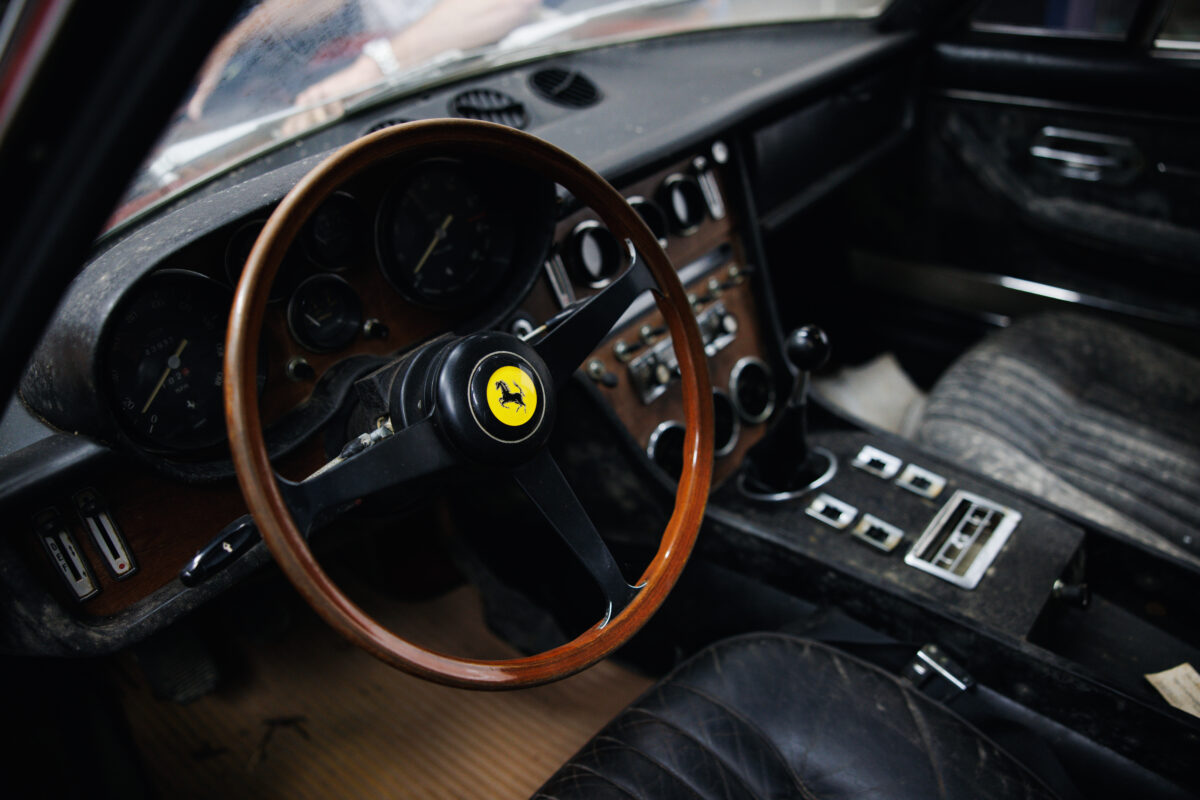
Recently, I spent some time in both models back-to-back and made the following assessments. While the 308 carbureted was a 1978 Ferrari and the Quattrovalvole was a 1985, I did not find there to be seven years worth of newer technology, comforts, or enhancements that made the car more “modern”. There are some subtle differences in the interior design,  switches, etc., but overall, most people would not realize one car was seven years newer than the other.

I will say, however, the 308 carbureted car is a blast to drive. The performance is what seems to be far better than that of the Quattrovalvole, and the sound is second to none. Of course, the nuances of dealing with a carburetor can be a challenge. Maintenance is certainly more challenging, and making sure those carburetors are working properly all of the time can be a chore. However, if you buy a nice, used Ferrari that has been maintained properly, by people who know what they are doing, you can get an excellent carbureted example.  And if you do, I believe you will think it is one of the most fun 308s you can possibly drive. Now yes, it can be more challenging  dealing with those carburetors, but once the Ferrari gets going and the distinct sound of the motor is heard, the hassle will be well worth it.

On the other hand, no one will turn their nose up at a Quattrovalvole 308. This Ferrari is an excellent choice, handles outstandingly well, and is still a wonderfully performing car. Much of what makes this 308 special today is the iconic design; and if you're anything like me, it is almost more enjoyable to stare at the car in your garage than it is to drive it, especially in the summertime when the heat is unbearable. Let's face it, if you are fortunate enough to have the ability to buy either the one, you will not make a mistake.

My recommendation is, if you are looking for a used Ferrari 308 that is a little bit easier to own and maintain, you probably want the Quattrovalvole.  However, if you can tinker with the Ferrari yourself, and you are willing to deal with the nuances of a carbureted Ferrari, I promise the sound and enhanced performance will leave you grinning from ear to ear.

When Is Too Much To Spend On A Ferrari Service and Restoration?

Investing money in a Ferrari and knowing when you are spending too much can be challenging and scary. Learn how Adam Merlin has navigated this process over the years and some of the key things he looks at when he is buying Ferraris.

Investing money in a Ferrari can get expensive real quick, and knowing when is enough is key to making sure you don’t end up spending more on the car than it is actually worth.  This scenario is one we are faced with on a daily basis as we hunt down used Ferraris across the country.

So, when exactly does the cost of the Ferrari service and restoration exceed the value of the car to the point that you just have to say it's not worth it? The answer to this question heavily depends on the Ferrari model you are talking about. As we all know, Ferrari is one of the most collectible brands in the world, and therefore, most models stand a chance of appreciating over time.  Other than the Ferrari model, you will also need to consider other items that might make that particular Ferrari more valuable such as, supply and demand on the market, rare packages, color combinations, number manufactured, etc.

Does this mean that it really does not matter how much you spend having your Ferrari serviced because it will eventually be worth it? Well, that very well might be true. We were just faced with this question regarding a 1983 Ferrari Mondial Quattrovalvole that needed restoration work. When we looked at the cost of the restoration on top of what we paid for the car, it was clear we would own the Ferrari for above market today.  We also considered other factors and, given that we believe the Mondial’s value has nowhere to go but up, the Quattrovalvole motor is a good motor, this particular Mondial has low miles and is a great color combination, we decided it was worth restoring.  In addition, we will be able to show the car, drive it, and enjoy it while we wait for the value to increase to the point where we can make a good return on our investment.  So, yes this specific Mondial is worth the investment in the long run.

In the Ferrari market, we currently see a lot of opportunity in the 20+ year old Ferraris.  Right now there are many used Ferraris that you can buy, and have serviced and restored to top condition, while still investing under $100,000 total.  As long as you stay under $100,000 and you have the time to wait, the Ferrari will eventually appreciate enough for you to realize a return on your investment.

Can Geographic Location Affect Used Ferrari Values?

There are stigmas attached to certain parts of the U.S. and how climate conditions in certain areas can affect vehicle valuations. Be sure you know what to look for when you are looking to purchase a Ferrari so you can be assured you are getting the best valued vehicle.

Many buyers, especially those in the southern or warmer climate areas in the U.S., can be nervous about purchasing a Ferrari from the northern areas because of the stigma that a Ferrari is going to be problematic simply because of its location and what the vehicle may have been exposed to. I hate generalizations, and in this case, you could be missing out on a great used Ferrari by not further investigating a car, and instead dismissing it based solely on its physical location.  Further, if you looked at every exotic car in the north, I am confident you would find many that are in excellent condition and have been very well cared for.  Simply said, you have to make sure to examine the car, and frankly, you should be doing that with any used Ferrari you are looking to buy regardless of the location.

What is the “big fear” of a northern car?  There definitely can be some concerns with these cars, but first lets examine exactly what they are so you know what to look for when you are hunting your Ferrari 430.  Harsh winters and extreme climates are the primary concerns people have when they are looking for used Ferraris.  There is a belief that driving these cars in the winter, and with salt on the road, can cause excessive rust issues, which can be like a cancer and really harm a car.  Yes, this is 100% true, rust can lead to major damage.  However, what you really have to look at is if the car has ever been driven in these conditions.  Many Ferrari owners will not even take their car out in the winter time and certainly not in the snow.  In fact, many people will store their car away for the winter and only allow their Ferrari on the road when it is snow and rain free.

It is also important to note that many times this generalization is made to more common vehicles that are purchased to be driven every day including the snow and rain.  In this case, the statement is much more valid.  As most know, many Ferraris are not purchased to be every day drivers, therefore making the case invalid.

Once again, in order to make the best purchasing decision, you need to evaluate all of the factors for that particular example. Consider which factors can affect the Ferrari’s value, look at the specific circumstances and conditions surrounding that particular Ferrari and come to a conclusion based on verifiable information.

How To Buy A Pre-Owned Ferrari With Paintwork

Investigating paintwork on a Ferrari before you purchase is a must because it can tell you a lot about the car and it can greatly affect the value. Read more to learn how to look for paintwork and when it should influence your purchasing decision.

What is the importance of paintwork on a used Ferrari?  What does it mean and what should you look for?

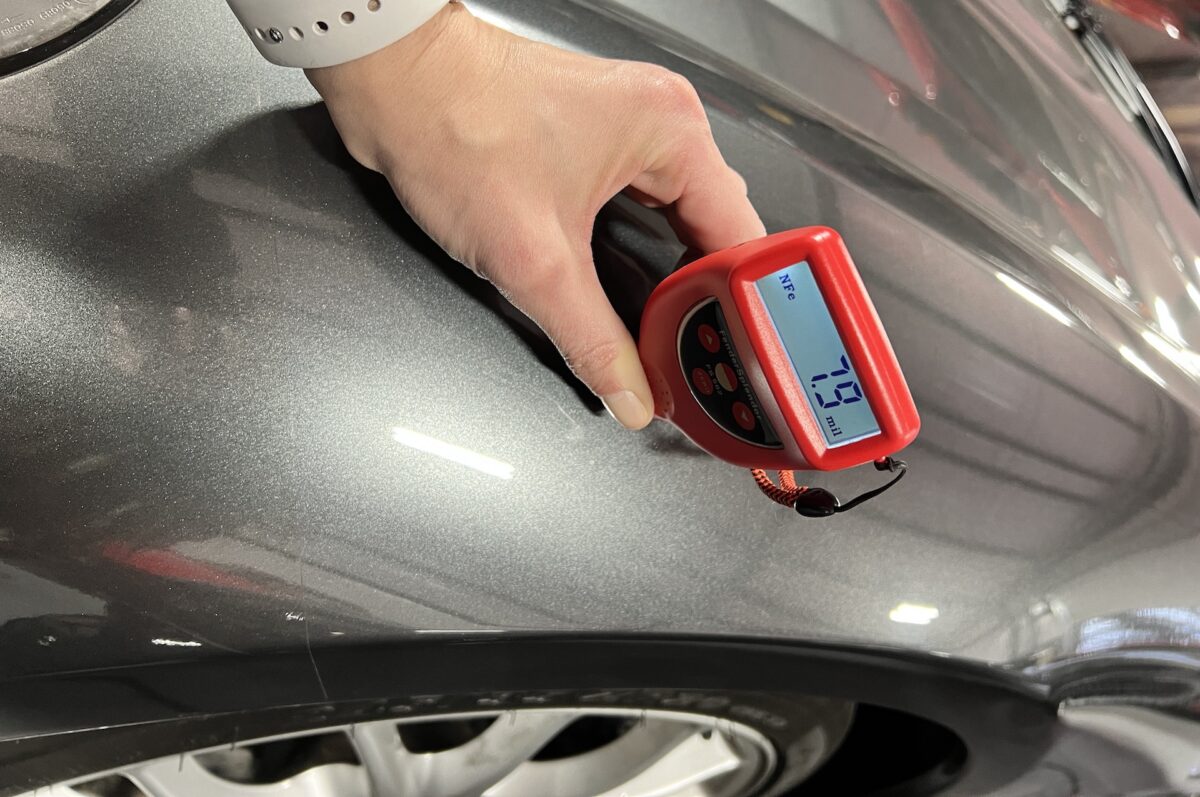
Looking for paintwork is very important when you are looking to buy a car, Ferrari or any other manufacturer.  Paintwork can tell a lot about a vehicle and its history, and in turn, affect the car’s value.  First, what is paintwork and how do you know if a car has it?  Paintwork put simply is a panel or portion of the car that has been repainted.  This could result from a variety of different things, years of rock chips, fading from the sun, tree sap, or a car accident to name just a few.  Determining if a car has paintwork can be done in one of two ways; one is by simply looking at the car, and the other is by using a paint reading tool.  Some paint jobs are obvious while others require a special tool that will measure the thickness of the paint.

How exactly does paintwork affect the value of the car?  This can be complicated to answer and really depends.  If the paintwork is the result of a bad car accident, then the car accident will affect the value of the car more than the paintwork will. While this probably seems pretty obvious, you must keep in mind that not all car accidents are the same and some may not affect the value that much.  For example,  your used Ferrari 308 may be parked next to another vehicle that pulls out of its spot and lightly brushes against your Ferrari scratching the paint.  While this type of accident is minor and is not going to cause mechanical concerns, the value of the car could be affected if the accident receives a Carfax and the next buyer does not properly investigate the Carfax.  Even further, in some instances people do not even report accidents so looking for paintwork is really necessary when buying any used Ferrari.

Paintwork can also affect value due to the originality valuation, which of course depends heavily on the specific Ferrari you are looking at.  Some Ferraris are much more valuable in their original condition with all their dings and scratches.  Some models will also bring a much higher valuation with all the original parts over one that has been maintained and may look much prettier asthetically.  I always advise anyone who does have paintwork performed for scratches, dings, or wear issues to get documentation of all the work done so it is not an issue down the road.

Just like artwork, vintage jewelry, or any other luxury good that can be collectible, there is no answer that is true across the board.  Therefore, when you are looking for a used Ferrari or any other exotic car, be sure to ask about paintwork and based on the answers, you should be able to evaluate how it should impact the value, or your purchasing decision either positively or negatively.

Where Can You Buy A Certified Pre-Owned Ferrari?

Certified programs for extremely popular and provide a great piece of mind when shopping on the used car market. Are there certified programs for exotic vehicles? Yes, there are, but learn the importance of the certified programs so you are armed with all the information you need to make an informed buying decision.

Where you can purchase a certified pre-owned Ferrari is a common question and concern for people looking to buy only the finest examples of used Ferraris.  Quite frankly, certified pre-owned vehicles by all manufactures have become a very popular alternative to buying a brand new car.  Certified pre-owned vehicles tend to be a terrific value, often a better quality than a standard used car, and they will give the buyer the peace of mind of an extended warranty to help offset any future costs that the car might have after purchase.

Many buyers value the extended warranty the most from a certified pre-owned vehicle, but the real reason these vehicles are of better value is because of the reconditioning process the vehicles undergo to become certified, not the warranty.  Manufacturers have a list of requirements that dealers must meet to ensure the vehicle is qualified for certified status, this could include various items such as, engine standards, miles, age, etc.

So, the question I like to ask is, what is more important, the extended warranty on the used Ferrari Testarossa, or the level of reconditioning and service that was done to make sure the Ferrari is in impeccable condition for the next consumer?  To me, this is not just obvious, but this is also very similar to what I do when I am purchasing Ferraris for my dealership.  I examine the service records to determine the car’s condition, where the service was done, who performed the service, the parts used, etc.  This helps me to determine the value and gauge if my Ferrari technicians will need to do more work outside the normal process all our vehicles undergo before sale.

The next question I have my clients consider is, what if there was a dealer who reconditions their used Ferraris the closest to perfection that is possible with the car.  In addition, what if the dealer was so confident in the condition of the car, and all the reconditioning that was performed, that they offer a certified program that mirrors the manufacturer’s program?  Further, what if the technicians reconditioning the Ferraris were master certified Ferrari technicians, some carrying a name known from coast to coast because of the unique talents with Ferraris?  My final question is, should you be looking for certified pre-owned Ferraris, or the Ferrari with the best value?

While not every dealer will do all mentioned, and not every dealer will have renowned Ferrari technicians, I wanted to illustrate the actual, important issues when looking at buying a pre-owned Ferrari, and the important benefits of a certified vehicle.  In closing, be sure to look at all Ferrari dealers when you are shopping for your next pre-owned Ferrari 360 because there are independents Ferrari dealers that offer certified programs replicating the manufactures program.


Ferrari F1 Clutch Driving Tips For A Longer Clutch Life

An F1 Transmission is certainly different from a six speed transmission and sometimes it can be difficult to tell when you are adding additional wear to the clutch. A premature service to replace a clutch is an expense to avoid, so read more to learn tips from our Ferrari experts on ways to drive with the least wear on your F1 clutch.

Replacing your Ferrari clutch is certainly not a minor Ferrari service expense and so it is definitely wise to be conscious of how you are driving your Ferrari, and the wear and tear it is having on your clutch.  There are also different wear factors depending on whether your Ferrari is an F1 transmission or a true-gated, six speed manual.  Driving a six speed manual you have much more control over the wearing of the clutch; you know when you are riding the clutch, you can smell when you are burning the clutch, and you know when you are simply wearing the clutch.

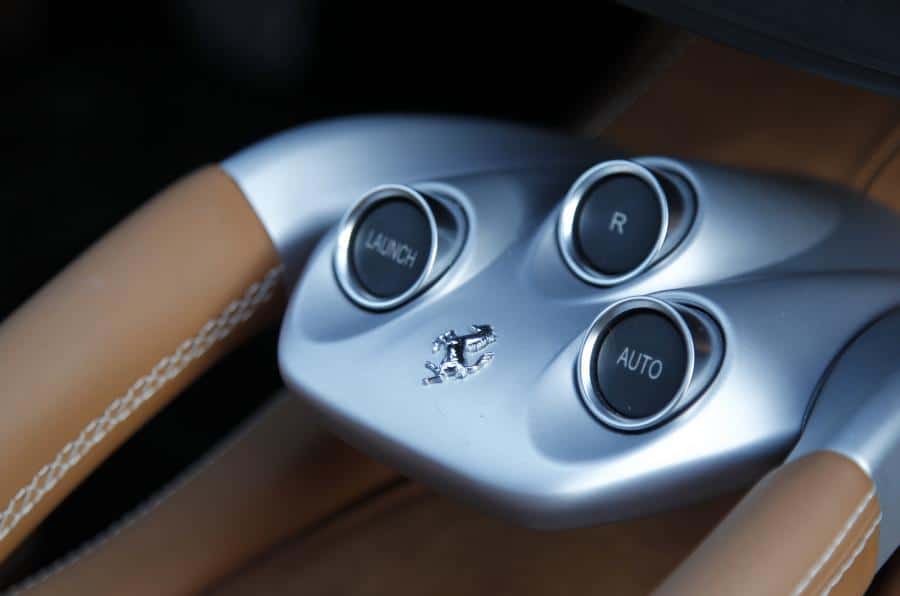
With an F1 transmission, it is much harder to determine when certain driving methods are wearing the clutch, and avoiding the huge expense of premature replacement is definitely of importance.  Here are a couple of tips from our master certified Ferrari technicians on limiting the wear with an F1 transmission.  First and foremost, limit driving your Ferrari in reverse. Driving an F1 Ferrari in reverse is the one thing that will cause the most damage to the F1 clutch.  Second, make sure you never back your Ferrari up a hill or up unleveled surfaces in reverse; this is a sure fire way to burn out your F1 clutch very quickly.

My recommendation, from years of driving experience with an F1 clutch, is to drive the car in sport mode; this will help increase clutch life.  This is not verified information, it is solely based on personal experience with our Ferraris, but we can confirm that driving in sport mode certainly does not wear your clutch any faster.  And let’s face it, this is absolutely the most fun way to drive an F1 transmission!  The other recommendation is to make sure you have your regular Ferrari service so a master certified Ferrari technician can examine your F1 system to ensure everything is functioning properly.  Sometimes a technician can catch something in the transmission that is causing extra wear on the clutch.  As always, regular Ferrari service is the best way to prevent any premature issues, but hopefully these tips will help you to maintain your Ferrari better in between service visits, and also prevent any major clutch issues.

Ferrari Services Require Ferrari Technicians

Anyone can service a Ferrari, right? Learn more as to why it is pertinent to choose a technician with actual Ferrari service vs. someone with exotic service experience.

It’s time for your annual Ferrari service, do you really need a Ferrari technician to do the work, or can it be someone who works on all exotic makes?   Simply said, yes, you really should have a Ferrari technician and let me illustrate why this is.

Many people comment, “oh a car is a car, anyone can change the oil or fix the breaks.”  While this may be true for some manufacturers, this is definitely not true for Ferraris.  In fact, after many years of experience, it has been proven over and over that this could not be any further from the truth.  There are many nuances and intricacies when it comes to servicing these handmade pieces of art.  Take the bolts for example, there are specific ways bolts need to be tightened and specific ones for particular models; risking something like a bolt not being properly tightened could cause a bolt to loosen and cause further damage.  There are even some Ferrari models that are similar in all aspects except for a slight change in a part that may not be noticeable to someone who is not trained to look for it.  Again, this may not seem like a huge deal, but small variances can lead to larger issues.

In addition to assembling the Ferrari properly, there are specific Ferrari diagnostic tools that will scan error codes and other messages, and a technician will be required to understand them.  There are generic scan tools on the market, that many believe can accurately diagnose check engine lights, etc., but this is absolutely not the case.  One can only imagine what can happen with a misdiagnosis and the end cost of correcting the error.

We have discussed before that it is not just the Ferrari services you do, but more importantly, who performs the services.  As a Ferrari buyer, I would actually prefer to buy a Ferrari that has not been serviced at all, than to have one serviced by someone who is not an expert.  Nine times out of ten, that will just lead to a larger expense correcting the errors made.  Always, always investigate who will be doing your service and make sure they are qualified.

Pre-Owned Ferrari Sticky Buttons and Shrinking Leather

Ferrari owners know that sticky buttons and leather shrinkage on the dash is something that is inevitable. Many solutions are out there and we have tried most of them. Learn what we find to be the best products, some of the downfalls of certain products, and preventative care.

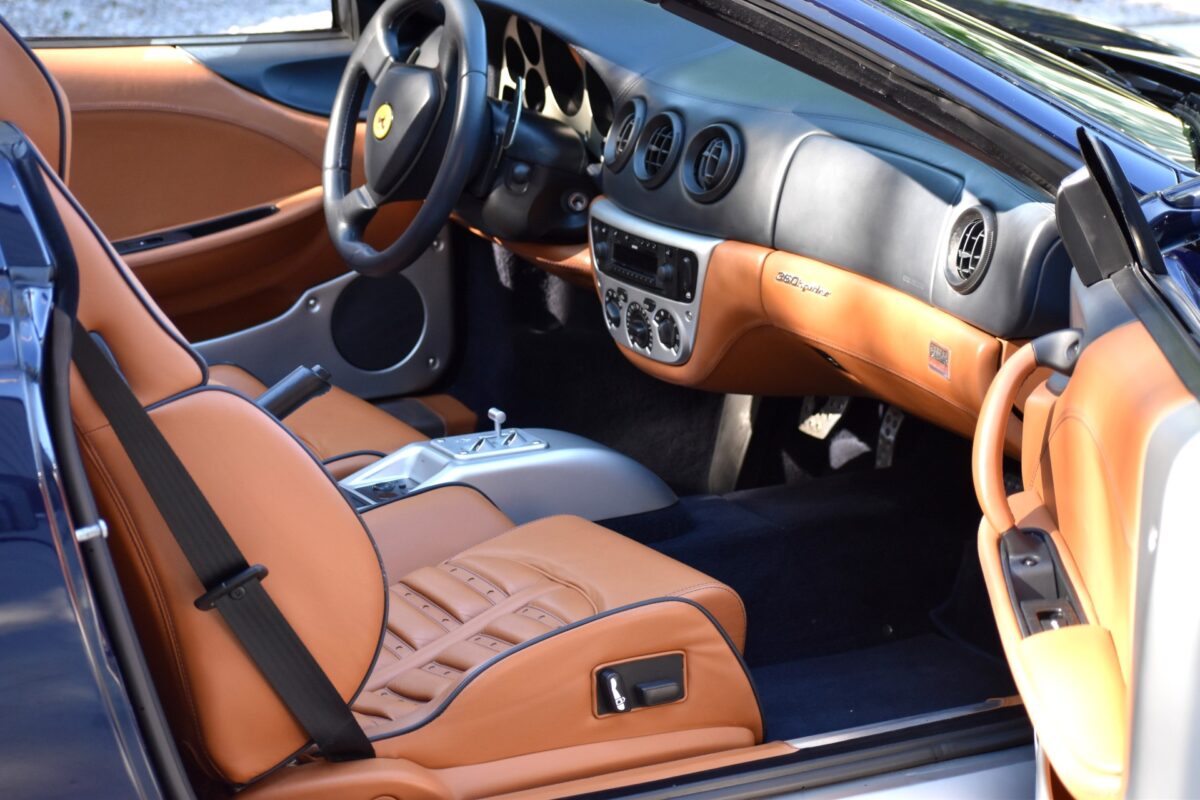
Ferraris are synonymous with words such as beauty, speed and power. Unfortunately, they are also synonymous with sticky buttons and leather shrinkage on the dash. Anyone who has ever owned a used Ferrari knows that at some point the buttons will start to develop a tacky feel and the leather on the dash will start shrinking. We are often asked about these issues and the good news is that we have had many years of experience dealing with these problems and have solutions whether you are having your Ferrari serviced, or doing the work yourself.

First, shrinking leather is not a problem that is unique to Ferrari. Many luxury and exotic cars that have fine leather covering a lot of surfaces can end up with damage that is mainly caused by being out in the sun. The harmful rays of the sun cause the leather to shrink and shrivel up leaving damage that is prevalent when looking at the car. Tinting your windows can help prevent some of this, but the best thing to do is buy a $20 windscreen deflector to use when your car is parked outside. Many are not a fan of the deflector, but they will prevent much of the sun damage and literally save you thousands next time you have your Ferrari serviced.

Ferrari sticky buttons…the ever infamous sticky button problem. We have spent years and countless hours trying to find a perfect solution to resolve this issue. Removal of the stickiness is an extremely time consuming process that literally take hours. In addition to your time and patience, there is also a level of skill required to ensure that you remove only the tackiness and not the words on the buttons, or something else.

Where exactly does this stickiness come from? Ferrari uses a rubberized product that, when heated or continuously charged, can cause the rubber to melt and become tacky to the touch. There is much speculation as to what actually causes the buttons to melt and become sticky, but at the end of the day it happens to all of them. How do we fix this? There are many products on the market that claim to fix this problem, but there are a few things to consider when selecting a product. First is effectiveness of the product, many products will only do a decent job and you will spend hours trying to remove the stickiness. For example, many people spend hours using lemon juice. The other issue experienced with many of these products, that you must be extremely careful of, is the possibility of the product being too strong and damaging other items. We have seen cars that have had strong acidic products used, leaving no graphics on the button, or worse, damaged leather. One product that we recommend and use on every single car that comes in for a Ferrari service is Jax Super Soap.

To sum everything up, our overall recommendation is to make sure you service your Ferrari in a facility that has factory certified Ferrari technicians because we advise removing the parts and then repairing the damage on the dash and sticky buttons. This will completely avoid further issues of chemicals spilling on other parts of the vehicle and causing damage. If you are doing the work yourself, then we highly recommend using Jack's Super Soap because the acid free product will not damage any other part.